

Observing Systems and Organizational Viability: Reflexivity, Complexity, and Responsibility in Intervention
Twenty-first-century organizations operate in environments characterized by ecological, social, technological, economic, and political interdependencies that exceed the reach of linear explanations. Under these conditions, organizational viability cannot be understood as the automatic result of an appropriate structure, a properly formulated strategy, or an aggregate of individual competencies. Rather, it is a systemic and emergent property […]
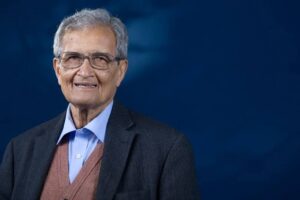
Amartya Sen and Organizational Viability: Capabilities, Agency, and Freedom to Sustain the Organization
Reading Amartya Sen’s work offers a fruitful avenue for reconsidering organizational viability from a perspective that transcends profit maximization and the mere availability of resources. Within the capability approach, development is not assessed exclusively by what people possess, consume, or report preferring, but by the real freedoms they have to be and do what they […]
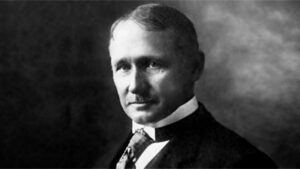
Taylor’s Scientific Management: Continued Relevance, Limitations, and Organizational Outlook.
During the research associated with my second doctoral dissertation, reading the work of Frederick Winslow Taylor allowed me to critically revisit an interpretation that, for years, had reduced his thinking to the image of an industrial foreman obsessed with time control and worker discipline. A renewed reading of The Principles of Scientific Management reveals a […]